The Shift from Sustainability to Regenerative Design
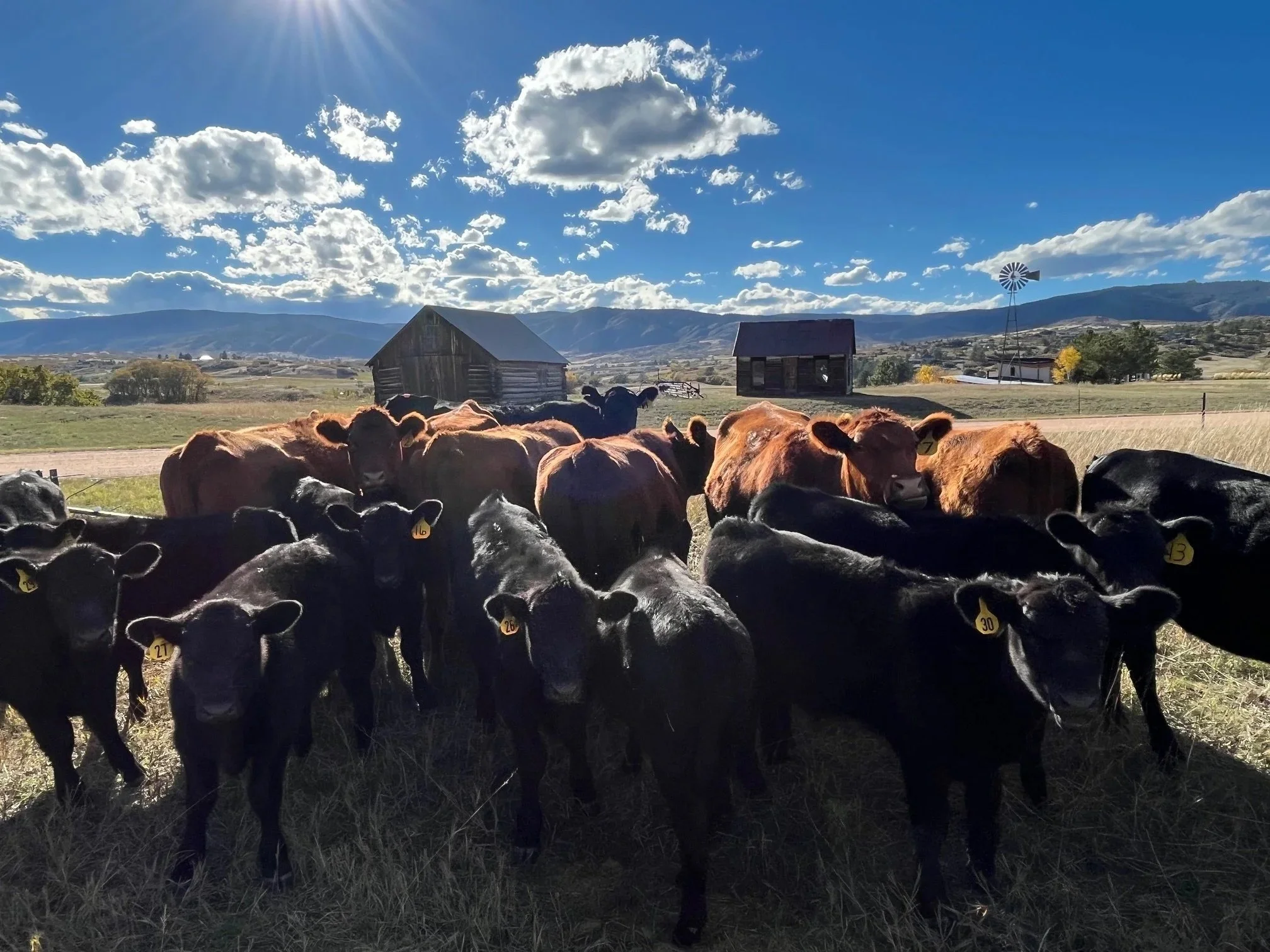
Mob grazing in action
If you search the term Regenerative, you will find many articles about medicine, many more about agriculture, and a few about architecture and design. That is not an indication, however, of how powerful the Regenerative movement is in Architecture at the moment. Several years ago, I changed my job title at a large architecture firm from Chief Sustainability Officer to Director of Regenerative Design. I did so for several reasons and have explained both my job title change and the Shift from Sustainability to Regenerative Design many times and in many places, but I have yet to share my approach to Regenerative Design in a blog, so here goes.
The Origins of Sustainable Design
Many younger architects and designers assume we have used the term sustainable design for a very long time, but that is not accurate. In 1969, Ian McHarg wrote the enormously influential book “Design with Nature” but that did not include the term sustainability. When I began my architectural career in the 1970’s, I had never heard the term applied to design, not even at the two schools of architecture I attended. Amory Lovin’s 1977 book “Soft Energy Paths” included the word sustainable, but It was not until the 1980’s that the term began to be heard routinely, and by the 1990’s it was in common use. Before then, we referred to design that aimed to lessen negative impacts on the environment as “Solar Design” or perhaps “Ecological Design.”
Definition of Sustainability
There are many potential origin points of the term Sustainability in the architecture and design fields. I believe the single most impactful one was the moment at which the United Nations offered a definition from the Brundtland Report in 1987. It was stated thus: “development that meets the needs of the present without compromising the ability of future generations to meet their own needs.” Most definitions since have relied on a similar formula, invoking the impact of present actions on future capabilities and conditions.
The Failures of Sustainability
Now that we have had 39 years to act on the Brundtland Report and implement Sustainability, how have we done? Despite a few successes (i.e. cleaner air and water in many places, more energy efficient buildings) I believe we have done very poorly. In fact, it is safe to say it’s been a failure, for these reasons:
Most measures of global environmental health have declined significantly since 1987
Human longevity has decreased in the last decade
Much more of the planet’s surface has been turned to human purposes
Species continue to go extinct; biodiversity is decreasing
Weather related disasters increase in frequency, severity, and cost
Global CO2 concentration in the atmosphere has increased from 347 ppm in 1987 to 430 ppm today – a 24% increase
Many young people today believe their ability to enjoy a prosperous future is severely endangered by the environmental failures of the past several decades. Much of what Sustainable Design sought to preserve in 1989 is already lost, and what remains is damaged and in need of restoration. Sustainable Design can be summed up by the phrase “Do less Harm” and simply doing less harm is no longer good enough.
As applied to buildings and development, Sustainable Design meant using less water and energy, relying on materials that pollute less in their manufacture, and using native plants in landscaping, among many strategies. All of these were great ideas and implementing them reduced the impact of development and building, but not nearly enough. Given the state of the natural environment and the current pace at which humanity continues to degrade it, Sustainable Design only delays collapse of the natural systems on which life depends.
Shifting from Doing Less Harm to Doing Good
Regenerative Design has as its primary goal the restoration, repair, and regeneration of those natural systems. At the least, it seeks to do no harm at all. Common strategies of regenerative design in architecture are net zero water, net zero energy, and net zero waste. Another would be using materials with zero embodied carbon, not merely reduced embodied carbon. All these strategies are achievable today, although some locations and some project types make these goals harder and more expensive.
Ideally a regenerative project would only be built on land already damaged or altered by previous development. If a regenerative project is proposed on virgin land, the owner or developer should restore and preserve an equal area of similar habitat, preferably in the same eco-region. This attitude toward the land and ecosystems is fundamental to regenerative design. A project or approach that claims to be regenerative without this attitude toward land use is like a broken pencil – pointless.
Assuming a project can be located on land that has been previously developed or equivalent habitat area can be preserved, other design strategies that contribute toward Regeneration are:
Moving beyond net zero energy to net positive energy
Using no more water than falls on the property annually or can be provided by on-site wells without lowering the water table
Building with local, healthy, materials that can be produced regeneratively
Reducing waste during construction to zero, or finding productive uses for any waste generated
Using all electric equipment for construction and buying clean power for that equipment
Building in a way that can be fully disassembled at the end of life
Is Regenerative Design for Real?
Supposed Regenerative projects are often depicted in renderings as covered by vegetation, both on the roof and parts of the vertical facades. This may be an appropriate design response in some climates, but I suspect such projects are the image of Regeneration more than the reality of Regeneration. Supporting and sustaining so much plant material on buildings most likely increases the mass and embodied carbon of the structure and requires more complex systems to keep plants alive.
Can we honestly say there are built projects that actively repair the environment; that contribute to better air and water; that improve habitats and biodiversity? Perhaps, but they are vanishingly few among the millions of construction projects occurring every year. When I present Regenerative Design, I do so as an aspirational ideal that we pursue; it’s a work in progress. In doing so, I openly acknowledge my past pursuit of Sustainability and the progress it brought about, but ultimately the inability of Sustainability to deal with our current situation and challenges.
I will offer up one project that approaches Regenerative Design in terms of land use – the ranch where I live with my supportive, patient. wife. The property is part of a land conservancy assembled in the late 1990’s from a former cattle ranch southwest of Denver.
We, along with our fellow homeowners, jointly manage the common property and work to restore the habitat as close as possible to its pre-settlement condition. The property includes a riparian corridor with a free-flowing creek. Using a variety of techniques such as mob grazing, goat weed management, spot mowing, and hand weed removal, we have reversed some of the damage from past over-grazing. Native species such as beaver, northern leopard frogs, and many small fish species now call it home. Vegetation near the creek has re-grown and our goal of a nearly continuous canopy of cottonwood, willow, and elder trees is coming about.
There is not a square foot of bluegrass sod on our property, and irrigation is limited to minimal drip zones for native plants, all from an on-site well. In many ways, the overall property is in much better condition than it was 25 years ago, a trend we plan to continue for many more years. We have seen first-hand that Nature can and will regenerate itself, but it takes a lot of time, and some help from us.
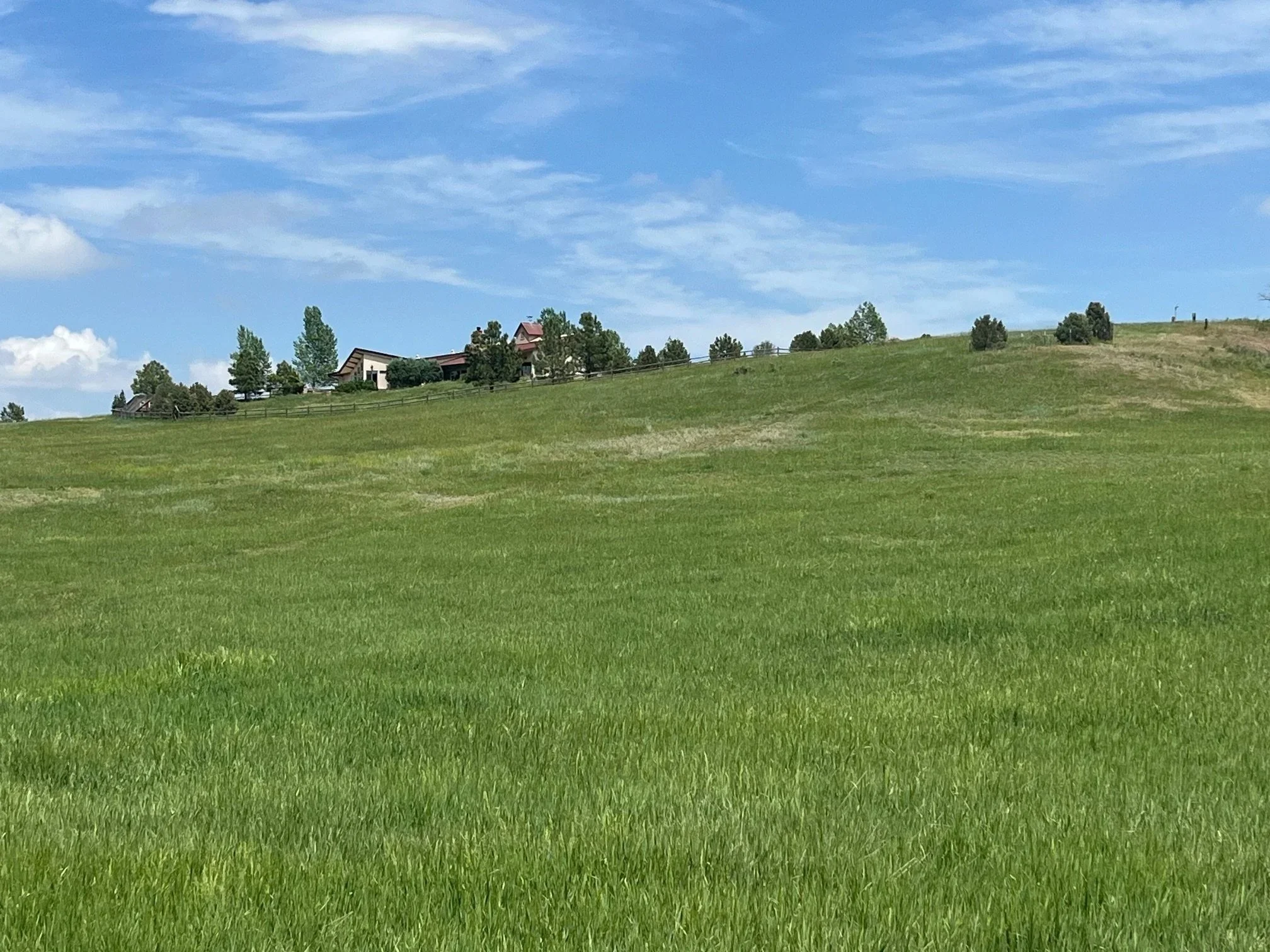
Sustainable ranch house
I plan to describe the sustainable house itself in a future post, so stay tuned!