Embodied Carbon: What took so Long?
The Origins of Embodied Carbon of Construction Materials
After decades of focusing on energy efficiency in buildings and accompanying greenhouse gas (GHG, aka carbon) emissions, the design and construction industry is rapidly shifting focus to include the other primary source of GHG and carbon emissions – construction materials. This paradigm shift is long overdue and leads me to wonder why it took so long for us to come to this realization.
As is often the case with emerging trends in any field, once an issue arrives at the forefront of our attention, we assume it has long been present and understood. That is not the case for the embodied carbon of construction materials. When I look back at our concerns as sustainable designers and architects only ten years ago, in 2016, I can find only a few mentions of embodied carbon. At that time, most architects could not have provided a concise definition of embodied carbon nor explained its importance. If we were to look even further back in time, it would have been difficult to find any architect aware of the environmental importance of materials.
What Took So Long?
If the environmental impact of construction materials is so significant, why did it take so long for architects and engineers to recognize this? Why were we so preoccupied with operational energy efficiency that we didn’t even consider what materials we were using? And when did we finally begin to grasp the importance of this issue?
I’ve been fortunate to have been a witness to this paradigm shift in thinking about the impact of buildings on the environment. When I began studying architecture as a college sophomore in 1973, the term sustainable design wasn’t in use. By the late 1970’s and early 1980’s, architects were earnestly trying to reduce the energy consumption of our buildings. We routinely spoke of solar design and energy efficiency, but sustainability as a collective goal was still in our future, and we were blind to the environmental impact of materials. In fact, we are likely to have used more and higher GHG emitting materials in our efforts to reduce operational GHG emissions. Examples are higher insulation levels and more complex HVAC systems.
Embodied Energy before Embodied Carbon
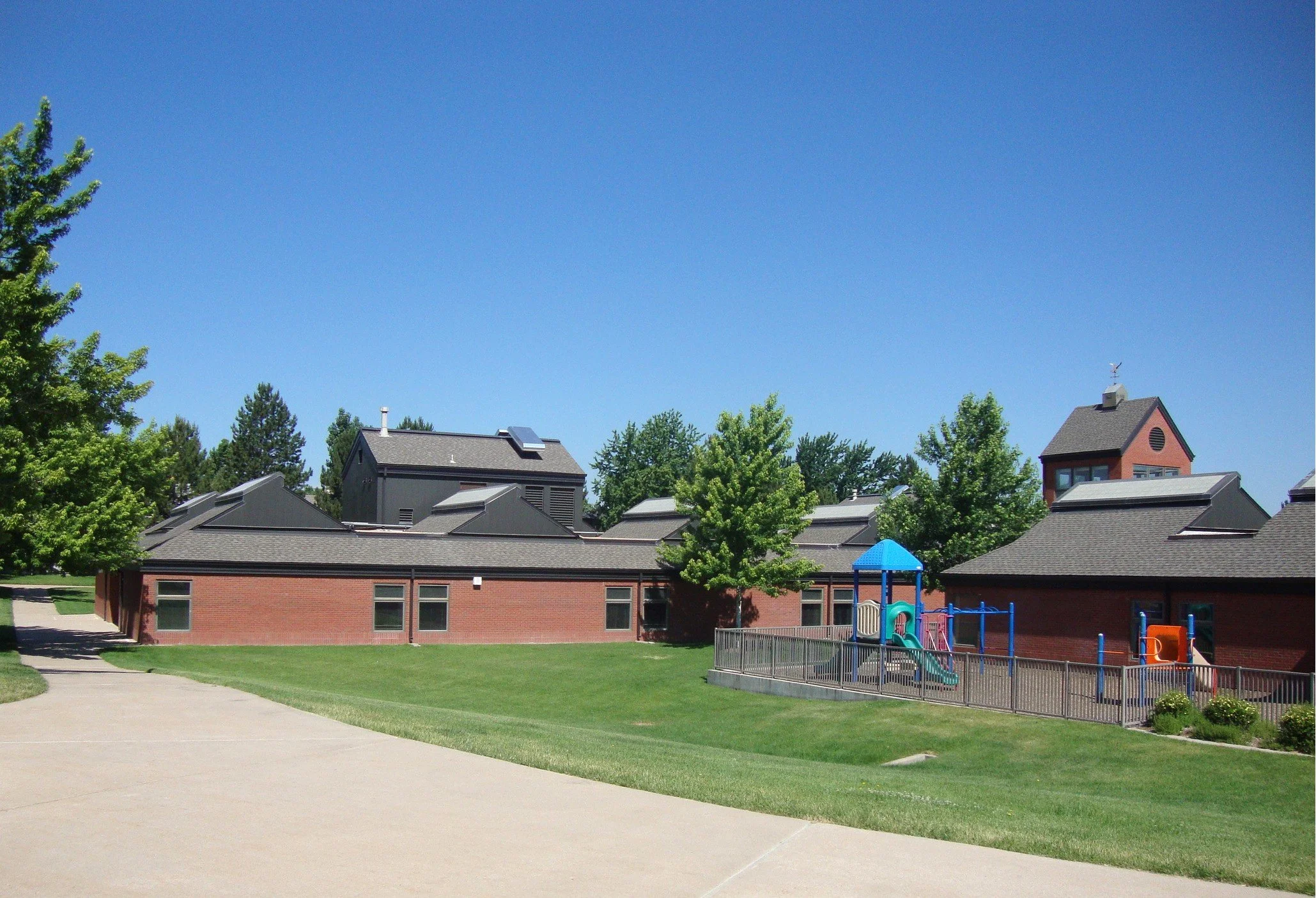
Century Elementary School, 1985 - first embodied energy analysis of my career
My first exposure to the concept we now call the embodied carbon of materials occurred as I was working on a Technical Paper to be presented at the 1986 National Passive Solar Conference. Working with two associates, Steve Ternoey, a daylighting consultant and former NREL employee, and Jim Logan, a graduate architecture student at the University of Colorado, we were comparing the operational energy use and utility cost for three elementary schools with nearly identical size and program, but very different approaches to envelope and HVAC systems. As the analysis was progressing, Steve suggested we include an analysis of the “embodied energy” of the projects.
Not having heard the term before, I asked Steve for an explanation and was told that all the energy used to remove materials from the earth, process them, transport them, transform them into final products, and finally to transport them to the construction site and assemble them, were an important consideration and that we should consider how this embodied energy compared to a lifetime of operational energy. As a result, our paper, still included in the Technical Proceedings of that Conference, included an analysis that evaluated the total environmental impact (measured in energy) of these three buildings over their first 30 years. It was the first time I had seen such an analysis, and I was stunned to learn how important construction materials were!
Lessons Learned from 1986 Paper
· Embodied energy can be up to 50% of total 30-year lifecycle energy.
· The building envelope and site contribute more to embodied energy than either site utility work or HVAC and lighting.
· Heavy materials such as concrete and steel have high embodied energy and greatly increase total lifecycle energy.
Due to the analysis we did in 1986, I became more careful with the materials that went into my projects, focusing on local sourcing as much as possible. In the 40 years since that paper, I have learned a lot more about the embodied carbon of materials.
By the 1990’s the term embodied carbon replaced embodied energy. Whereas embodied energy was a simplistic approach to understanding materials (although it required intensive library research) embodied carbon is far more rigorous and inclusive of all phases of construction activity. This change in terminology coincided with growing acceptance of climate change due to greenhouse gas emissions from human activities. Carbon rapidly became shorthand for all fossil fuel emissions and so it was natural to label the impact of construction materials as “embodied carbon.”
LEED, Carbon Leadership Forum, Architecture 2030, and AIA LFRT
A handful of organizations and individuals are responsible for driving the increased awareness and importance of embodied carbon in the profession over the last 20 years. Highlights are:
The first LEED rating scorecard in 1998 included regional sourcing of materials, but the emphasis was primarily on reducing the transportation of those materials to the construction site as opposed to the GWP potential of the materials themselves. LEED version 5 places tremendous emphasis on decarbonization and the embodied carbon of materials but is just now becoming mainstream.
In 2010 the Carbon Leadership Forum (CLF) was founded at the University of Washington with participating progressive architects who were also involved with AIA. The CLF focus was on embodied carbon, and they have strongly influenced the awareness of embodied carbon in these other organizations.
Architecture 2030 began as an organization in 2005 dedicated to reducing building operational energy use and associated carbon emissions to net zero by the year 2030. While it still pursues and promotes that goal, in 2011 Architecture 2030 established its Challenge for Products, establishing a baseline for carbon footprint reporting. That has since evolved into the Challenge for Embodied Carbon.
In 2019, the Large Firm RoundTable (LFRT) of the American Institute of Architects (AIA) issued a document called Countdown on Carbon that encouraged all architects to focus more deeply on the embodied carbon of construction materials. For many firms, that was a wakeup call on embodied carbon.

Aspen Community School, Woody Creek, CO, 2016 - Early Whole building Life Cycle Study at Cuningham Architects
New Tools
Thanks to the efforts of the above organizations and others, we now have at our disposal several tools that enable us to quantify and assess embodied carbon. Their pioneering efforts led to EC3, Whole Building Life Cycle Assessment, Carbon Leadership Forum, Environmental Product Declarations (EPD’s) Tally, Mindful Materials, and so much more that we take for granted today. Without these tools and organizations, we would not be able to make sense of the issue, and we would most likely not have the code and legislative initiatives that promote the reduction of embodied carbon.
Codes and Legislation
While efforts to achieve reductions in construction material carbon emissions have been largely voluntary and driven by architects and engineers in the last several years, states and cities have begun to include the issue in regulations and building codes. In 2017, California enacted a state law that required several classes of materials to have maximum Global Warming Potential (GWP) limits for state funded projects. Colorado followed in 2021 with a similar law. Since then, many other states and cities have enacted legislation limiting the GHG emissions of construction materials.
Now, just a few short years later, virtually all major architecture firms have initiatives focused on reducing the embodied carbon of their projects. Here in Colorado where I am based, a recently retired local structural engineer (Robert Redwine, P.E.) founded the Colorado Embodied Carbon Collaborative (CECC). I am glad to be involved with that as a member of the Board.
Conclusion
As Thomas S. Kuhn pointed out in his wonderful book, The Structure of Scientific Revolutions, paradigm shifts can take a very long time to develop. Once accepted by a critical mass of practitioners, however, the new paradigm becomes entrenched rapidly. The memory of a time before that shift fades and the old paradigm simply evaporates. So it has been with construction materials; that they matter we now take for granted, as we should. How we got here, we hardly know. But that knowledge is still there if we care to dig deeper.