Last Wednesday through Friday I attended the environmental Flows Cohort Training Program, hosted by the River Network, the Colorado Water Trust, and Western Resource Advocates. The 12 of us members of this year’s cohort spent two days in classroom training and one day on the Blue River in Silverthorne, CO, learning about the critical importance of instream flows to Colorado rivers and streams. We also learned how to calculate minimum instream flows for healthy habitats, especially in support of fish populations.
This work seems very important after the challenging drought of the last 12 months. Although the last two months have brought some welcome moisture to the state, the lingering impacts of the drought from October 2025 through August 2026 are impossible to ignore. All of us who were there have personally experienced stretches of water that were direr than we have ever seen, and in many cases, rivers and creeks that completely dried up. The damage to ecosystems and wildlife in these drainages is significant and long lasting.
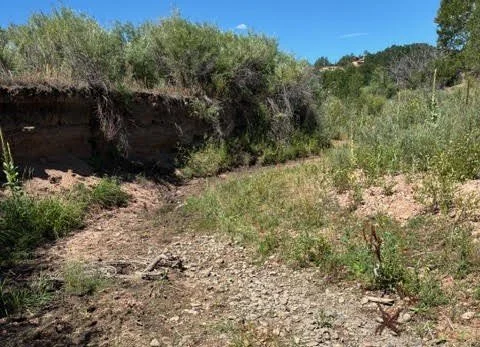
Dry creek bed, July 2026
While the lack of precipitation and higher temperatures are the underlying cause of such conditions, human appropriation and management of water contributes a great deal. Virtually all our rivers and creeks are overallocated in terms of existing water rights and when all these rights are fully exercised in times of drought, there may be nothing left.
The concept of instream flows dates to the 1973 Colorado Instream Flow Act, which authorizes the Colorado Water Conservation Board (CWCB), and only the Board, to appropriate and acquire, on behalf of the people of Colorado, water in natural streams and lakes for instream flow use. An instream flow water right allows the use of water within the stream to preserve or improve the natural environment to a reasonable degree.
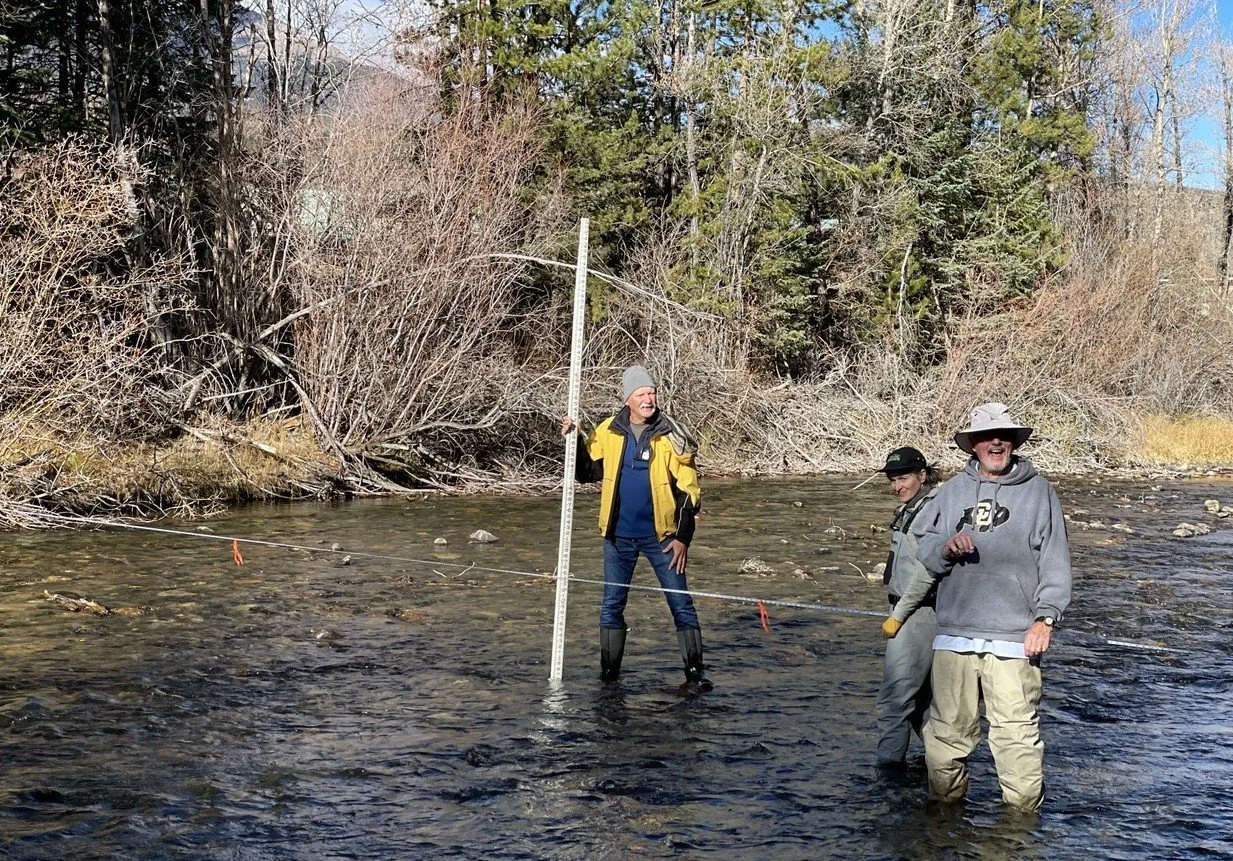
Performing R2Cross analysis on Blue River, Oct. 2026
The CWBC can obtain a water right for instream flow through either appropriation or acquisition. Acquisitions may be either temporary or permanent. Temporary acquisitions could be a loan or a lease of water. Very importantly, instream flow rights always respect Colorado Water Law and are subject to established water law and water court.
There are already hundreds of instream flow rights across Colorado’s rivers and streams. Our cohort plans to assist in the establishment of many more, collaborating with landowners, water rights holders, and environmental advocates. In doing so, we hope to improve the health of Colorado’s waterways and the wildlife that lives in and around them.
#RiverNetwork #ColoradoWaterTrust #WesternResourceCenter #InstreamFlows